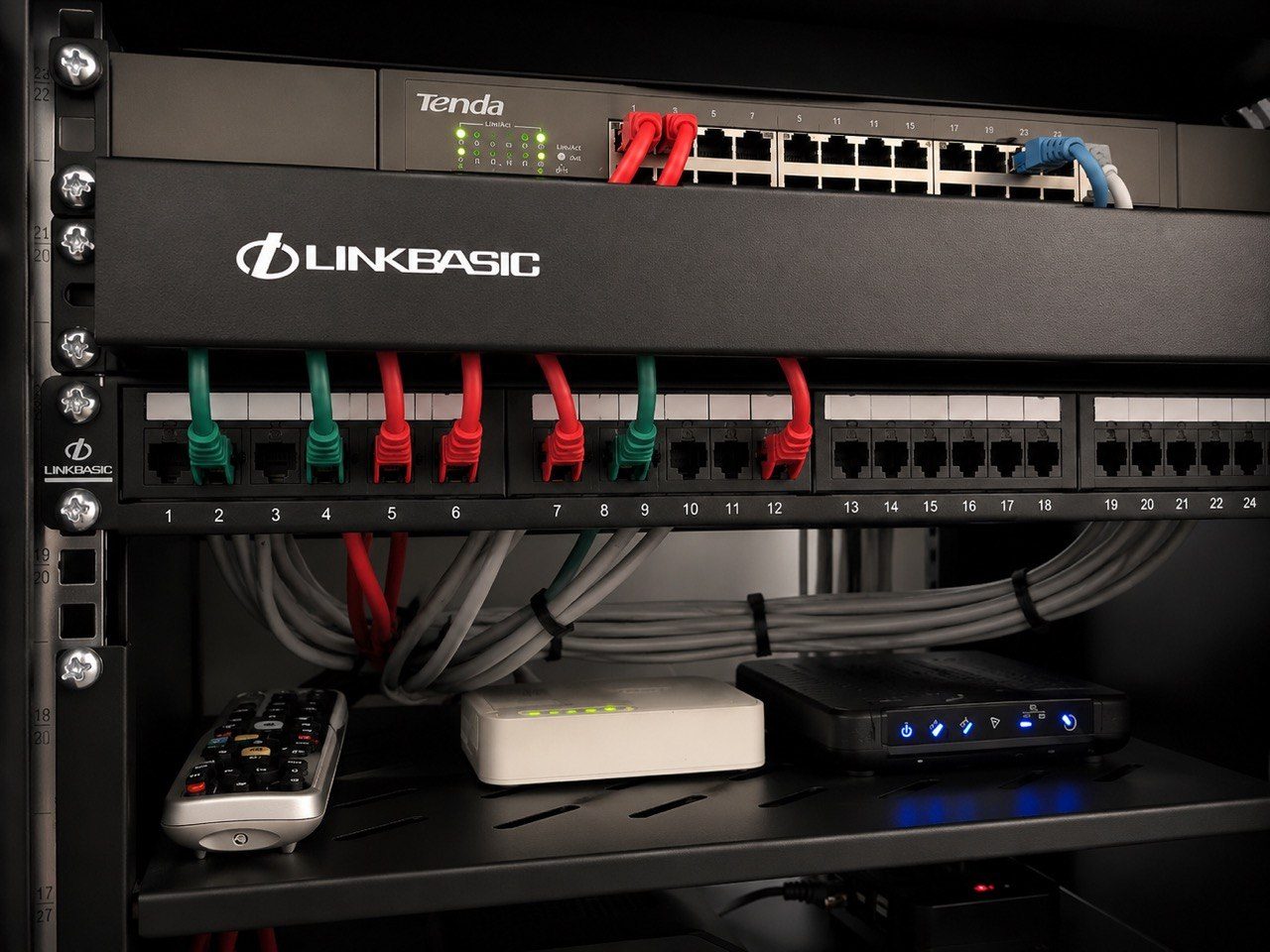
Most smart-home frustrations are not caused by the touch panel, the app or the TV. They start earlier, with the network. If the cabling routes are compromised, the Wi-Fi plan is guessed, or there is no real equipment space, the rest of the system ends up fighting the building.
That is why we push network planning forward in the project timeline. It is cheaper to correct on drawings than on site, and much easier to protect the architectural finish if the technical routes are already agreed.
What should be locked in early
The first layer is structured cabling. We want clear decisions on TV points, wireless access points, gate and intercom positions, CCTV runs, audio zones, touch panels and future spare lines. Even if every device is not installed on day one, the pathways should already exist.
The second layer is wireless coverage. Large homes, concrete slabs, metal roofs and entertainment verandas all change RF behaviour. A single consumer-grade Wi-Fi router is not a plan. Coverage, roaming and backhaul need to be considered as part of the design, especially where streaming, security and control traffic all live on the same property.
The third layer is equipment location. A proper rack or plant space gives us power conditioning, thermal management, labelled terminations and room for maintenance. It also keeps fragile electronics out of decorative joinery and away from the heat load that shortens equipment life.
Where projects usually go wrong
The common failure pattern is familiar:
- access points are placed after ceilings are closed
- no cabinet space is reserved, so equipment is scattered through the house
- AV devices are patched into the same unmanaged network without segmentation
- spare conduit and pull strings are skipped to save a small amount up front
Each one looks manageable in isolation. Together they create a system that is harder to support, harder to scale and visibly messier than it needed to be.
The better approach
We treat the network as core infrastructure, not as a late add-on. On a project like Hemyock Farm, that means planning the rack, coverage and distribution around how the estate is actually used: kitchen audio, veranda entertainment, TV distribution and day-to-day reliability.
For homeowners, the result is simple: better roaming, fewer dropouts and cleaner hardware integration. For architects and builders, it means fewer reactive changes once finishes are already under pressure.
What to decide before the build is too far along
Before ceilings are closed and joinery is fixed, we want agreement on:
- equipment room or rack location
- wired data points and spare runs
- access point positions
- CCTV and gate/intercom pathways
- AV distribution requirements
- remote support and maintenance access
If those are resolved early, the rest of the system is usually cleaner, faster to commission and easier to live with.
The network is not the glamorous part of a project, but it is the layer everything else depends on. Get that right first.
